The Enrollment Tightrope: Balancing Legal Compliance with Parent Trust
Ensuring residency verification compliance without losing the trust of your community.

Every summer, public school districts face a high-stakes balancing act. On one side is the strict mandate for compliance: districts must ensure that every enrolled student legally resides within their boundaries to protect taxpayer funding, maintain accurate classroom projections, and ensure fair athletic eligibility.
On the other side is the parent experience.
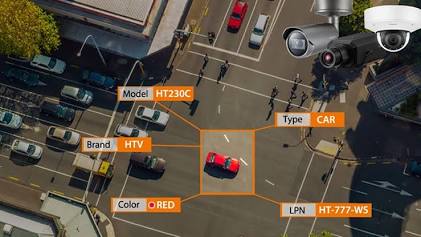
To achieve compliance, many districts have historically relied on high-friction, document-heavy systems. Parents are asked to dig up multiple utility bills, produce notarized affidavits if they rent or live in shared housing, or navigate rigid, confusing portals. In extreme cases where fraud is suspected, some districts resort to private surveillance or intrusive license plate recognition.
While the goal is fiscal responsibility, the result is often a public relations nightmare that treats families like suspects before their children even step foot inside a classroom.
There is a better way. Compliance doesn’t require surveillance, and protecting district resources shouldn’t come at the cost of community trust. Modern technology now enables districts to complete their residency verification requirements quietly, accurately, and respectfully – limiting the need for any sort of investigation to only true fraud cases.
The Hidden Cost of "Paperwork Overkill"
Traditional residency verification relies heavily on physical documentation. A typical district might require a deed or lease, plus two unique utility bills matching the parent’s name and address.
While this seems straightforward on paper, it introduces significant friction for the community:
- The Equity Gap: Complex living arrangements—such as multi-generational households, families staying with relatives, or low-income renters whose utilities are included in their rent—struggle to produce standard documentation. This disproportionately burdens vulnerable families.
- The Suspicion Factor: When a district rejects a blurred PDF upload or demands a notarized statement because a parent's driver's license doesn't match their new address yet, it sends a clear message: We don't trust you.
- The Administrative Burnout: School front-office staff can spend hundreds of hours squinting at utility bills and manually trying to validate submitted paperwork, leaving them exhausted when they couldbe welcoming new families.
When verification feels like an interrogation, the school-home partnership is fractured before the school year even begins.
Shifting from Active Intrusion to Passive Automation
The key to keeping schools compliant without upsetting the community is shifting the burden of proof away from the parent. Rather than forcing 100% of families to prove who they are and where they live through manual paperwork, districts can use automated backend verification.
CivicBell approaches residency verification through a quiet, multi-layered data verification process that can integrate directly with a district's Student Information System (SIS):
1. Address Validity Screening
To start, the system runs the provided address through validity check- ensuring it’s an occupied residential address (not a vacant lot, commercial business, or P.O. Box) and correctly maps it to the exact localized attendance zone.
2. Document-Free Verification
Instead of asking parents to scan and upload bills, CivicBell cross-references the parent or guardian’s name and address against secure, authoritative data providers to confirm primary residency.
3. Automated Document Screening
When uploads are necessary, such as during initial enrollment (or dependent on local or state regulations), our system instantly checks the submitted files for authenticity, compliance, name/address matches, and forged or fraudulent documents while maintaining a full, timestamped audit trail.
4. Isolated Investigation
For the "easy 90%" of the student body, the verification happens instantly behind the scenes. Parents experience a seamless, friction-free enrollment process. The district’s human resources are then preserved exclusively for the remaining edge cases—allowing staff to investigate true discrepancies with targeted tools rather than auditing the entire community.
The Ultimate Win-Win: Protecting taxpayer dollars and district boundaries shouldn't happen at the expense of community goodwill. By automating the verification process, districts can maintain ironclad compliance, eliminate manual data-entry errors, and ensure accurate school capacity projections—all while giving parents the seamless, respectful welcome they deserve.
Moving toward a document-free, automated verification framework isn't just an operational upgrade for your central office; it's a statement about how your district values its relationship with the community.
Want to see how document-free residency verification can integrate seamlessly with your district's current enrollment workflow? Schedule a brief demo with the CivicBell team today.
Get in Touch with Our Team
Would you like to see a demo? Get a trial account?
Reach out, and our team will get in touch with you shortly.