Accountability Without Espionage: Why School Residency Verification Shouldn’t Rely on Automated License Plate Readers
How school districts can protect tax dollars and ensure accurate residency compliance using modern, privacy-first digital workflows—without resorting to invasive license plate readers or vehicle tracking.
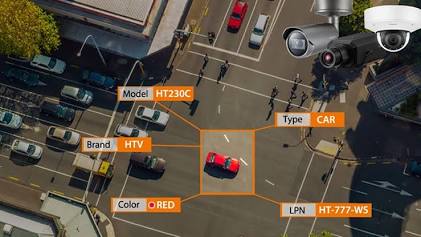
Ensuring that local school tax dollars support local students is a fundamental duty of school administrators. While thorough due diligence and targeted follow-up have their place when resolving complex situations, turning to automated dragnet surveillance—such as License Plate Readers (LPRs)—crosses the line from standard oversight into intrusive mass monitoring.
This is no longer an isolated scenario or a handful of rogue edge cases; it has quickly escalated into a troubling nationwide trend.
A recent investigative report by NBC 5 Chicago, “‘Big Brother on steroids:’ lawmaker questions school surveillance of families,” highlighted the growing legislative pushback in Illinois against deploying automated plate readers and costly third-party surveillance to track daily school commutes. In some districts, automated tracking and prolonged monitoring have led to misinterpretations of family circumstances, strained community trust, and significant legal and administrative expenses.
Civil liberties advocates have identified this as a clear example of technological overreach. A deep dive by the Electronic Frontier Foundation (EFF), “More License Plate Reader Mission Creep: School Residency Verification, Background Checks, and Noise Complaints,” documented how commercial ALPR networks—originally pitched solely for serious criminal investigations—are quietly being queried to police school district boundaries and monitor families without judicial oversight.
From suburban Midwest districts to communities across the Southeast, public unease is mounting. As highlighted in the Atlanta Journal-Constitution piece, “What the Flock? Surveillance cameras causing citizens to fret,” parents and residents nationwide are expressing alarm over the proliferation of camera networks that log daily routines, turning neighborhood streets and school drop-off zones into monitored checkpoints.
At CivicBell, we believe districts don't need to turn to mass-tracking LPR technology to maintain fiscal integrity. There is a far more reliable, privacy-first, and equitable way forward.
The Hidden Pitfalls of LPRs and Dragnet Tracking
Relying on vehicle-tracking technology creates distinct blind spots for districts:
- Eroded Community Trust: Schools thrive on mutual trust. When parents feel tracked in drop-off lines or monitored by automated camera networks across town, it creates an unnecessary barrier between families and educators.
- Flawed Context & Inaccurate Triggers: License plate readers register where a vehicle was at a single second—not custody schedules, rideshare arrangements, family emergencies, or caregiver carpools. Treating LPR scans as definitive proof often results in false alarms, administrative headaches, and erroneous disenrollments.
- Disproportionate Harm to Marginalized Families: Invasive automated surveillance inherently undermines an equitable learning environment by creating steep access barriers. Non-traditional households, multigenerational families, single working parents, and families facing housing instability are far more likely to be unfairly flagged, profiled, and burdened by rigid monitoring.
- Resource Misallocation: Funding continuous automated plate networks or defaulting to prolonged field surveillance shifts district budgets and focus away from proactive, front-end administrative solutions.
A Privacy-First Alternative: How CivicBell Delivers Accountability
CivicBell was built on a simple premise: Residency verification should be modern, secure, and respectful. Districts can achieve residency compliance without using license plate readers or tracking a family's vehicle.
1. Prioritizing Equity and Inclusion by Design
True educational accountability means ensuring that no legitimate student is pushed out or burdened due to their socioeconomic status or non-traditional living arrangement. CivicBell is specifically built to:
- Eliminate Subjective Profiling: Standardized, data-driven validation removes human bias and subjective suspicion from the verification process.
- Support Complex Living Realities: The platform seamlessly accommodates multigenerational households, non-parental guardians, shared custody, and transitions under McKinney-Vento protections without triggering punitive alerts.
- Remove Access Barriers: Families complete verification without taking time off work, standing in long registrar lines, or proving their daily whereabouts.
2. Zero Automated Vehicle Tracking
CivicBell strictly avoids License Plate Readers and physical tracking networks. Instead, our platform uses secure, privacy-preserving digital workflows to cross-reference authoritative residency documentation, property records, and verified filings. We confirm eligibility, not daily transit habits.
3. Multi-Stakeholder Accountability
Our approach balances precision with dignity across the entire school ecosystem:
- For Taxpayers: Ensures school funding and public resources support eligible in-district students through verifiable, cost-effective digital audits.
- For School Staff & Registrars: Streamlines intake workflows, eliminates paper clutter, and avoids putting frontline staff in uncomfortable policing roles.
- For Parents & Guardians: Delivers a secure, friction-free verification process that protects sensitive data without subjecting families to passive tracking.
4. Objective Data Before Escalation
While rare and highly complex edge cases may occasionally require administrative review, CivicBell ensures districts resolve the vast majority of verifications upfront using concise, standardized data. By establishing an objective audit trail first, districts uphold due process, equity, and family privacy.
Moving Forward: Verification with Dignity
The nationwide conversation around school surveillance highlights a critical standard: school communities expect transparency, equity, and privacy.
School districts can protect public resources and maintain rigorous standards without adopting automated surveillance tech or penalizing vulnerable households. With CivicBell's proven and established platform, districts achieve precise, equitable, and cost-effective residency verification—no license plate cameras, no invasive tracking, and no compromises.
Ready to modernize your district’s enrollment verification while upholding family privacy and equity? Learn more at CivicBell.com or schedule a demo with our team.
Get in Touch with Our Team
Would you like to see a demo? Get a trial account?
Reach out, and our team will get in touch with you shortly.